
What problem we solve
- Reproducibility crisis
- Fragmented data silos
- Submission friction (SEND, IND, IMPD)
- Systemic animal overuse due to non-reusable data
Turn preclinical studies into reusable, traceable evidence.

Not an ELN. Not a LIMS. Not an AMS.
Metadatapp sits above these systems as a shared metadata layer.
Metadatapp is:
Tailored value for each stakeholder in the preclinical chain.
Reusable, standards-aligned evidence that makes cross-cohort studies, open science, and grant reporting simpler.
Shareable metadata and traceability that reduce rework for SEND, IND, IMPD packages.
Evidence pipelines that de-risk IND and IMPD reviews and speed decision-making.
Vision: Extract maximum scientific value from every animal used.
Problem: scattered spreadsheets and siloed systems force repeat studies, missed phenotypes, and submission friction.
Solution: a research-grade FAIR metadata infrastructure that structures metadata, monitors outcomes, and integrates with your lab stack—so studies are traceable and reusable.
Metadatapp is not a digital notebook or database plumbing. It turns animal experiments into structured, interoperable scientific assets that can be combined, compared, and reanalyzed without re-running cohorts.
Ontologies, standards, and interoperable metadata boost statistical power and translational probability.
Reduction via reuse of traceable evidence; refinement via better monitoring; replacement via better predictions.
Less reinventing data, accelerated timelines, and AI-ready assets for multi-site programs.
Metadatapp isn't merely "compatible" with FAIR; it makes FAIR measurable:
Capture once, reuse everywhere—centralize and link data, metadata, and protocols to cut repeats.
Ontology-driven, FAIR-by-design architecture with audit trails and SEND/ARRIVE-aligned outputs.
Secure sharing across sites; LIMS/ELN/HCM integrations; assets ready for AI and review.
Investigations → Studies → Assays. Ingest from LIMS/ELN/AMS with lineage intact.
JSON-LD + vocab validation so every subject and assay stays comparable. See <a href="/fair-by-design">FAIR</a>.
Assets, not files: export, reanalyze, and compare across cohorts. Browse the <a href="/use-cases">use cases timeline</a>.
Traceable metadata → higher statistical power → fewer repeated experiments.
Better monitoring → fewer missed phenotypes → earlier decisions.
Cross-site reuse → reduced duplication and cleaner transfers.
Ask: “How many mice could we reduce with 30% reuse of traceable behavioral metadata?” Talk to us.
No. Metadatapp connects with your existing systems—ELNs, LIMS, HCM platforms—to avoid duplicate entry. It serves as a metadata hub that enriches, links, and harmonizes what you already capture.
Metadatapp manages preclinical metadata—subjects, protocols, devices, and outcomes—using ontology-based standards (JSON-LD, ARRIVE, FAIR, NWB soon) for semantic consistency and submission-ready packages (SEND, IND, IMPD). Learn more in <a href="/fair-by-design">FAIR-by-Design</a>.
Metadatapp records all subject and experiment life events, enabling traceability, reproducibility, and transparency aligned with ethical best practices.
Export to CSV, JSON, JSON-LD, and RO-CRATE (NWB coming soon), and integrate with analytics tools, publications, or repositories like OSF.
Metadatapp serves academic labs, CROs, and pharma teams. Its modular architecture scales from small studies to enterprise programs.
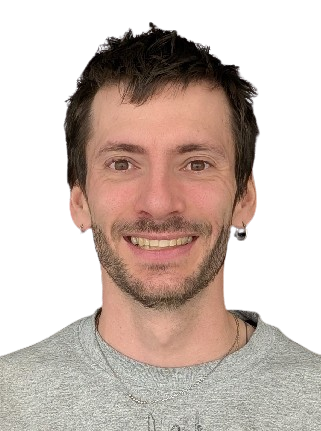
Creator and CSO
Behavioral and metadata consultant at Neuronautix, developing Metadatapp as an API-first FAIR metadata platform for preclinical pipelines. Works at the intersection of behavior, physiology, and data science; co-developed LWTools and helps run TheBehaviourForum.org.

Backend Backbone
API Platform specialist; reviews architecture, hardens code, and crafts reusable modules.

Co-founder and CEO
Business development leader with 20+ years in MedTech across hematology, cell therapy, and osteoarthritis. Shapes GTM, builds CRO/biopharma/academic partnerships, and drives commercialization that keeps preclinical metadata FAIR and usable. Native French; fluent in English and Spanish.
Validate alignment with SEND, IND, IMPD, and audit expectations.
Key takeaways from Damien Huzard's VICT3R webinar on FAIR metadata, operational standardization, and reuse in preclinical in vivo research.
How we make preclinical metadata FAIR-by-design.
 ORCID
ORCID